Nobel Laureates and Global Leaders Visit Tambling Wildlife Nature Conservation
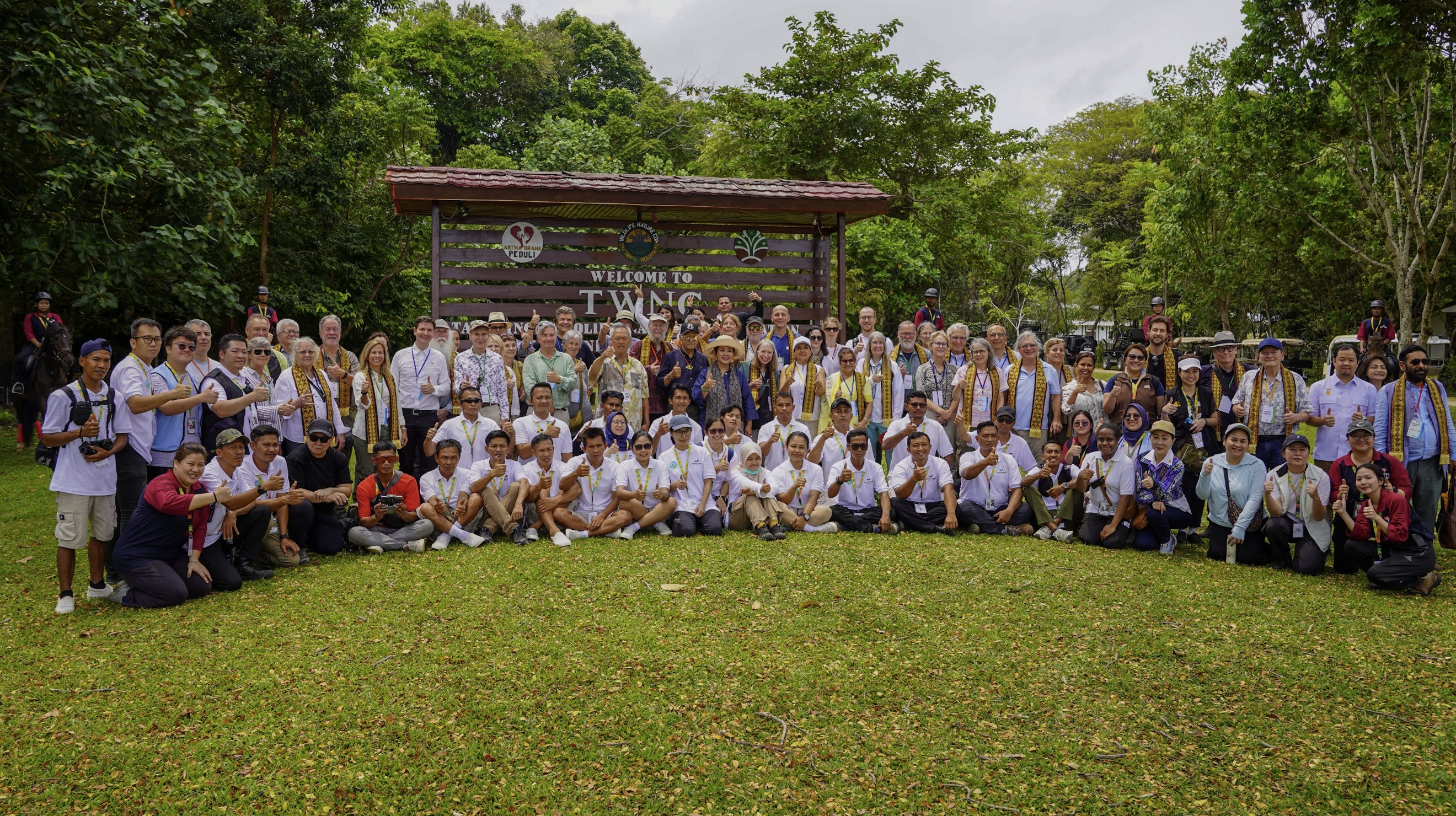
Twenty-one Nobel laureates, Turing Award recipients, scientists, academics, and global leaders visited Tambling Wildlife Nature Conservation (TWNC) in Lampung on August 27–28, 2026. The visit served as an opportunity to showcase Indonesia’s rich biodiversity while bringing leading thinkers from around the world together with three decades of conservation experience at Tambling.
The distinguished guests were welcomed by Siti Hediati Soeharto, Chair of Commission IV of the House of Representatives of the Republic of Indonesia, who also served as the host of the event.
TWNC was selected as the venue due to its diverse natural landscapes and long-standing conservation experience. Managed by Artha Graha Peduli since 1996, TWNC became part of AGP’s environmental program through a collaboration with the Ministry of Forestry in 2008.
Covering 48,153 hectares of forest and 14,089 hectares of marine area, TWNC encompasses lowland tropical rainforest, coastal forests, mangroves, lakes, freshwater wetlands, and secondary forests.
Siti Hediati Soeharto said that Tambling provides a space where Indonesia’s natural wealth meets science and global collaboration. Three decades of conservation at TWNC demonstrate that protecting nature requires strong, long-term commitment focused on future generations.
“Tambling introduces something very important. Conservation is not a short-term project, but a long-term commitment for future generations.”
“Today, I believe Tambling Wildlife Nature Conservation can become something much greater. Tambling can serve as a living laboratory, where nature meets science, technology, education, and international relations,” said the Chair of Commission IV of the House of Representatives while welcoming the Nobel laureates.
The occasion also provided an opportunity to build broader connections between Indonesia’s conservation experience and the global community.
“We are here not only for Tambling, but also to learn, help develop new ideas, and explore how science and technology can strengthen biodiversity protection, climate resilience, and sustainable development. Welcome to President Ramos-Horta and all the Nobel laureates to Tambling,” she concluded.
Tambling’s conservation experience also highlights the importance of leadership and community involvement in protecting nature. Nobel Peace Prize laureate and President of Timor-Leste José Ramos-Horta identified the leadership of Tomy Winata as one of the key lessons from the conservation experience in the area.
“One thing that can be learned is leadership. This is the leadership of Tomy Winata. It is encouraging that the government and local communities have entrusted the responsibility of managing this area for 30 years,” he said during the release of sea turtle hatchlings.
Ramos-Horta also emphasized that conservation efforts must take into account their relationship with local communities.
“You cannot do anything without engaging and collaborating with the people who live here. They need to feel involved, trust the process, and then create a great experience. They are not spectators.”
The conservation efforts at Tambling also include wildlife protection, particularly the Sumatran tiger (Panthera tigris sumatrae), which is classified as Critically Endangered. The Sumatran Tiger Rehabilitation Center at TWNC provides care and rehabilitation for tigers involved in human-wildlife conflicts before returning them to their natural habitat.
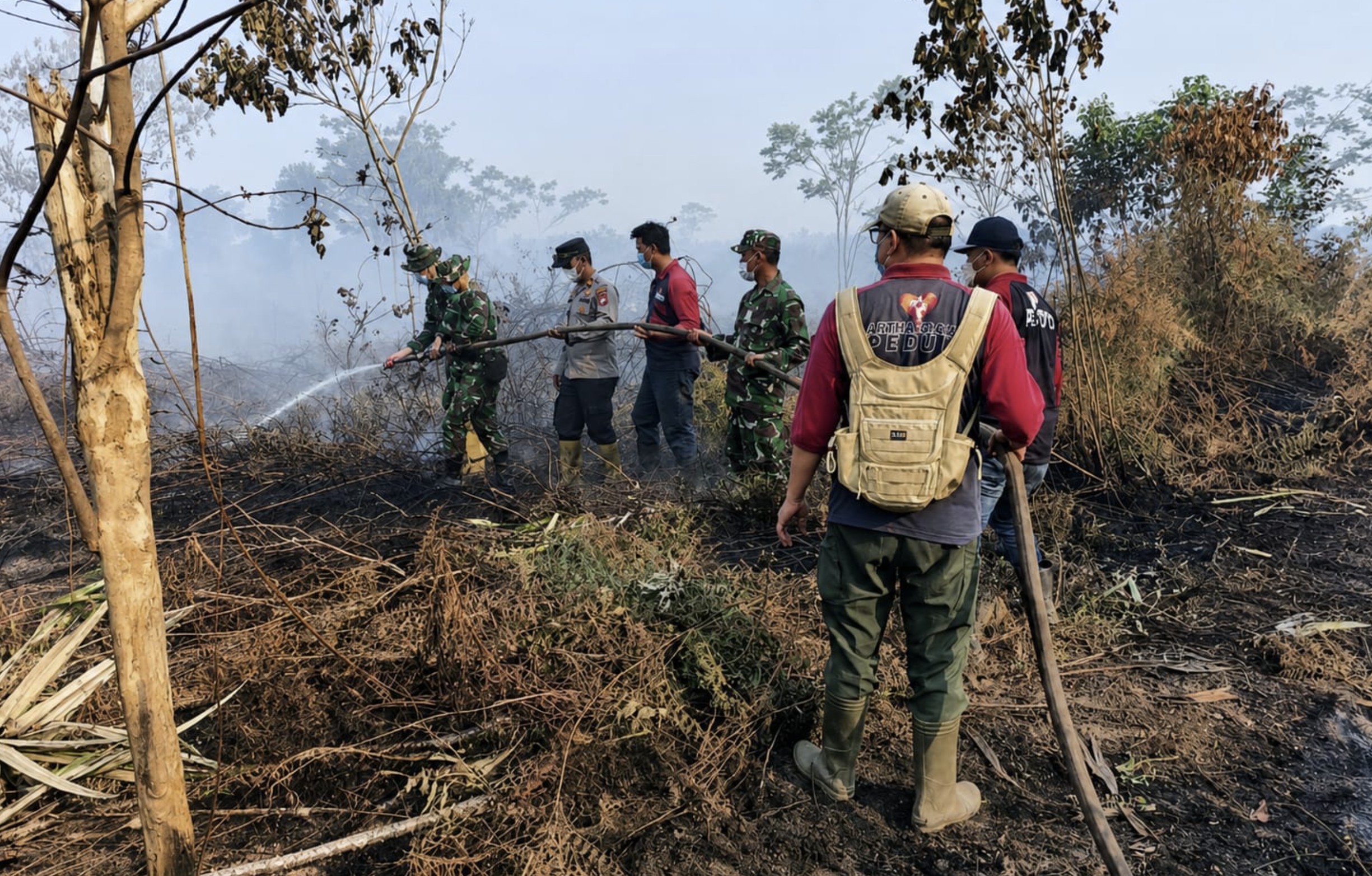
Protecting forests also means maintaining environmental balance and reducing various pressures on nature, including the risk of forest and land fires.
Well-preserved forests serve not only as habitats for wildlife, but also as carbon stores, water regulators, and natural buffers that support the livelihoods of surrounding communities.
In a broader context, Ramos-Horta viewed Indonesia’s experience in protecting nature as an important lesson for the world. Indonesia also faces various environmental challenges, ranging from forest fires to natural disasters.
“Indonesia itself is an example for the whole world,” he said.
The presence of Nobel laureates and global leaders at Tambling therefore provided an opportunity to directly explore the connection between science, conservation, and sustainability.
With diverse backgrounds and areas of expertise, the participating global figures brought a wide range of perspectives to the gathering. The participants included:
José Ramos-Horta — Nobel Peace Prize, 1996
Frances H. Arnold — Nobel Prize in Chemistry, 2018
Tim Hunt — Nobel Prize in Physiology or Medicine, 2001
Benjamin List — Nobel Prize in Chemistry, 2021
Robert C. Merton — Nobel Prize in Economic Sciences, 1997
Konstantin Novoselov — Nobel Prize in Physics, 2010
Frederick Jay Ramsdell — Nobel Prize in Physiology or Medicine, 2025
James A. Robinson — Nobel Prize in Economic Sciences, 2024
Brian Paul Schmidt — Nobel Prize in Physics, 2011
David Beasley — Nobel Peace Prize / World Food Programme, 2020
Jack Joseph Dongarra — Computer Science / Mathematics, 2021
Martin Edward Hellman — Computer Science / Cryptography, 2015
Whitfield Diffie — Computer Science / Cryptography, 2015
Richard S. Sutton — Computer Science, 2024
Torsten Hoefler — Computer Science, 2025
Sara Seager — Astrophysics, 2024
Howard Yana Shapiro — Agriculture & Environmental Sciences, 2009
Kailash Satyarthi — Nobel Peace Prize, 2014
Leander Heldring — Economic Sciences, 2024
Peter Badge — Nobel Photographer, 2000
Gilles Brassard — Computer Science, 2025
“Tambling is a truly unique place. It is neither a zoo nor a park, but a natural ecosystem where animals, birds, fish, and all forms of life continue to exist in balance. The challenge is to preserve this uniqueness without losing its authenticity. I believe every country needs a place like this, so that we can appreciate what we have before it is lost, because restoring it is far more difficult than protecting it from the beginning,” said Laura Anne, representing one of the Nobel laureates.
The visit is expected to serve as an opportunity to share Indonesia’s story through the perspective of its natural wealth and its long-standing experience in environmental conservation.
As expressed in the principle of TWNC’s founder: “We protect nature, and nature protects us.”
More News

#arthagrahapeduli